
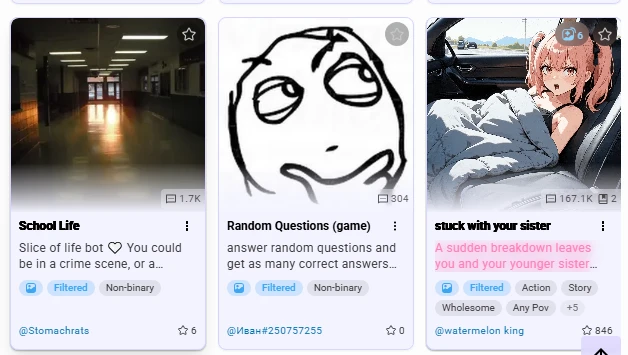
AI character chat creates more natural interactions through advanced language models, memory systems, personality design, and emotional response technologies. In 2024, large language models with billions of parameters improved conversation quality by analyzing context, tone, and user preferences. Research in human-computer interaction shows that users rate AI systems with consistent personalities and memory features as more engaging than basic chatbots. The combination of real-time response generation, personalized communication, and character-based behavior allows AI chat platforms to provide conversations closer to everyday human communication.
AI character chat has changed from simple question-answer software into interactive systems that can maintain longer conversations. Early chatbot programs mainly depended on fixed scripts, but modern systems released after 2020 use transformer-based models to predict language patterns and understand relationships between sentences.
A traditional chatbot may only match keywords, while an AI character can analyze previous messages, user preferences, and emotional signals before generating a reply. A 2023 study in conversational AI research showed that contextual memory improved user satisfaction scores by more than 30% compared with systems without memory functions.
Users usually describe conversations as more natural when the AI remembers previous topics instead of treating every message as a new request.
This improvement comes from several technologies working together:
| Technology | Function | Example |
|---|---|---|
| Large language models | Generate human-like responses | Understanding complex sentences |
| Memory systems | Store conversation preferences | Remembering hobbies or writing styles |
| Sentiment analysis | Detect emotional tone | Responding differently to frustration or excitement |
| Personality settings | Maintain character behavior | Creating unique speaking styles |
The ability to keep context also supports more stable relationships between users and AI characters. Human conversations depend heavily on previous experiences, and AI systems now attempt to reproduce this continuity through stored information and personalized settings.
Personality modeling has become one of the most important features in AI character chat. A character is not only defined by what it says but also by how it communicates. Developers can create characters with different speaking patterns, interests, backgrounds, and emotional responses.
For example, a virtual language tutor may use structured explanations, while an entertainment-focused character may use casual expressions and humor. In a 2024 survey of 1,000 AI chatbot users, more than 60% reported that consistent personality made conversations feel more realistic.
Consistent character behavior helps users understand what type of interaction they can expect from the AI.
AI character platforms also use adaptive communication. Instead of providing identical answers to every person, these systems adjust vocabulary, response length, and conversation style based on user behavior.
Common adaptation methods include:
-
Changing formal or casual language styles
-
Adjusting explanation depth
-
Remembering preferred topics
-
Modifying emotional expression
A user who asks technical questions may receive detailed explanations, while another user looking for casual conversation may receive shorter and friendlier replies. This flexibility is one reason AI character chat continues to attract users across entertainment, education, and personal communication fields.
The role of emotional response technology has also expanded. Human conversations include emotional information beyond words. A sentence such as “I finished my project after six months” contains a sense of effort and achievement that a simple information system may ignore.
Modern AI systems analyze:
-
Word selection
-
Sentence structure
-
Conversation history
-
Emotional expressions
According to research published in 2023, sentiment-aware conversational systems improved perceived empathy ratings by approximately 25% compared with standard response models.
AI does not experience emotions, but it can identify emotional patterns and generate replies designed to match the conversation context.
This capability has also appeared in areas involving romantic or intimate conversations. Some platforms provide adult-oriented character interactions, including ai sexting, where users communicate with AI characters through personalized dialogue systems. These applications mainly rely on language generation, character settings, and user preference adjustment to create customized conversations.
Memory technology further improves long-term interaction. Without memory, users must repeatedly explain the same information, making conversations feel disconnected. With memory features, AI characters can remember details such as preferred topics, communication habits, or previous discussions.
For example:
| Without Memory | With Memory |
|---|---|
| User repeats personal preferences | AI remembers previous settings |
| Each conversation starts again | Conversations continue naturally |
| Limited personalization | More customized responses |
Several AI platforms introduced memory features between 2022 and 2024, and user retention rates increased in many applications after adding personalized conversation functions. In some consumer AI studies, personalized systems achieved engagement improvements of around 20% compared with general-purpose chatbots.
The technology behind these improvements depends heavily on large language models. Models developed after 2020 significantly increased language understanding by training on massive text datasets. GPT-style architectures, for example, use attention mechanisms to evaluate relationships between words across long passages.
A model with billions of parameters can recognize patterns from previous training data and generate responses that fit the current conversation. However, model size alone does not determine interaction quality. Character design, memory management, and response control also influence whether users feel comfortable during conversations.
AI character chat is also widely used in entertainment and education because it allows interactive experiences. Unlike traditional media, users can influence conversations and receive immediate responses.
Applications include:
-
Virtual storytelling characters
-
Language practice partners
-
Gaming companions
-
Learning assistants
-
Personal productivity helpers
A 2024 report on digital interaction trends showed that more than 70% of younger users preferred applications offering personalized experiences rather than identical content for everyone.
The development of voice and multimodal AI may further improve natural interaction. Current systems mainly communicate through text, but newer platforms combine text, speech recognition, and visual information.
Multimodal systems can analyze:
| Input Type | Information Processed |
|---|---|
| Text | Meaning and context |
| Voice | Tone and speaking style |
| Images | Visual information |
| User behavior | Interaction preferences |
Research groups have demonstrated multimodal AI systems capable of processing several types of input within seconds. In 2024, many commercial AI applications began testing voice-based character interaction, allowing conversations to become closer to real-time communication.
However, AI character chat still faces several limitations. Maintaining consistent behavior during very long conversations remains difficult, and protecting personal information stored in memory systems requires careful design. Users also need clear information that AI characters simulate conversation rather than possess human emotions.
Future development will likely focus on improving memory accuracy, response control, voice interaction, and personalized character creation. By combining these technologies, AI character chat continues moving toward conversations that feel more natural, continuous, and suitable for different user needs.